
Takeaways from the BirchStreet Supplier Survey Report
The strongest, most resilient supply chains are built on strong relationships. But when it comes to hospitality buyers and their suppliers, the conversation is usually transactional. It’s focused on price, delivery, and compliance. But what if buyers are missing an opportunity to strengthen the relationship in a way that benefits both buyers and suppliers.
In a recent survey, we surveyed more than 50 hospitality suppliers, from small-to-medium sized vendors to multinational operations across 15 countries, to find out what matters most to them in their relationships with hospitality buyers.
Growth Comes First
62% of suppliers named increasing sales as their top business priority. The most valuable features among suppliers who prioritized sales growth all centered on better visibility into, and access to, hospitality buyers.
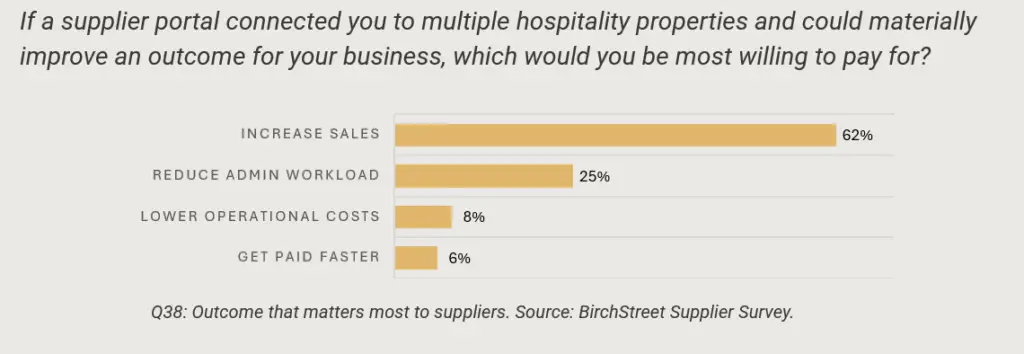
Suppliers don’t want procurement to be easier; they want to grow their business through their relationship with buyers. They want to find and stay current with the right people, see which properties are live and buying, understand demand patterns so they can anticipate buyer needs, and have a clear path to expand into new properties.
When buyers create pathways for suppliers to expand their footprint across their properties and reach teams, they strengthen the relationship and address a core business need.
A Tailored Approach
Despite the overall trend towards growth, our survey showed that supplier priorities aren’t one-size-fits-all. A small, resource-constrained vendor prioritizes different things than a medium-sized supplier experiencing rapid growth, which is completely different from what a large multinational focuses on. What works for one segment will miss the mark for another.
Barriers for Suppliers
Our survey results showed that 59% of suppliers were very or somewhat likely to purchase a premium program that reliably delivered on their top priority outcome. But when asked what most limits their growth with hospitality buyers, suppliers were more concerned about adoption and maintenance rather than the ROI.
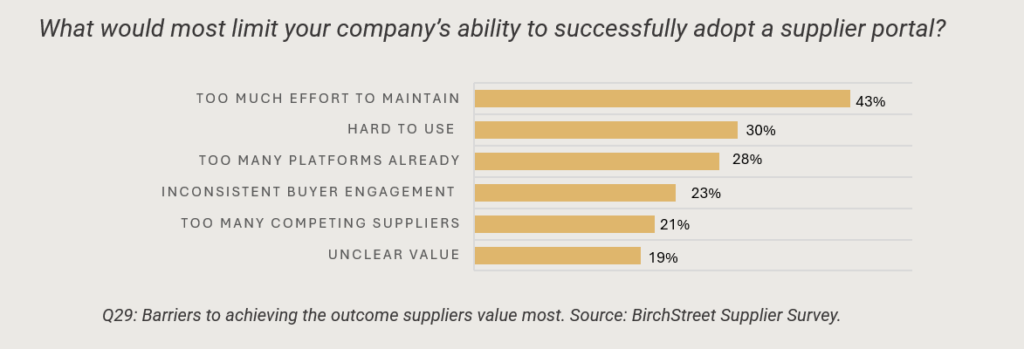
The operational friction suppliers face, including the day-to-day hassles of managing compliance, invoices, and documentation, is the biggest barrier. They know the value is there, but suppliers need to be assured that buyers will actively show up on their end.
Buyer Strategic Advantage
Most conversations about supplier relationships in hospitality focus on operational efficiency. How do we reduce paperwork? How do we speed up onboarding? How do we make compliance less painful?
But buyers are missing a key opportunity. Suppliers want to know: How do I grow? How do I reach more of your properties? How do I get in front of the right people on your team? How do I compete for your business more effectively?
When buyers answer those questions, something shifts. Suppliers don’t just execute orders more efficiently; they prioritize the account. They invest resources into the relationship, and they think about you differently.
Hospitality buyers who build these closer relationships will have a strategic advantage including:
- Faster onboarding for new suppliers
- More reliable supply chains because suppliers have skin in the game
- Better data quality because suppliers manage their own information
- Fewer compliance headaches because systems are clear and automated
- More innovation because suppliers feel like true partners
The Bottom Line
The hospitality industry’s supply chains are only as strong as the relationships that power them. For years, many buyer-supplier relationships have been transactional. But the suppliers surveyed showed a desire for something different. They want a relationship where they can grow, where they’re visible and accessible, and where the friction is removed.